


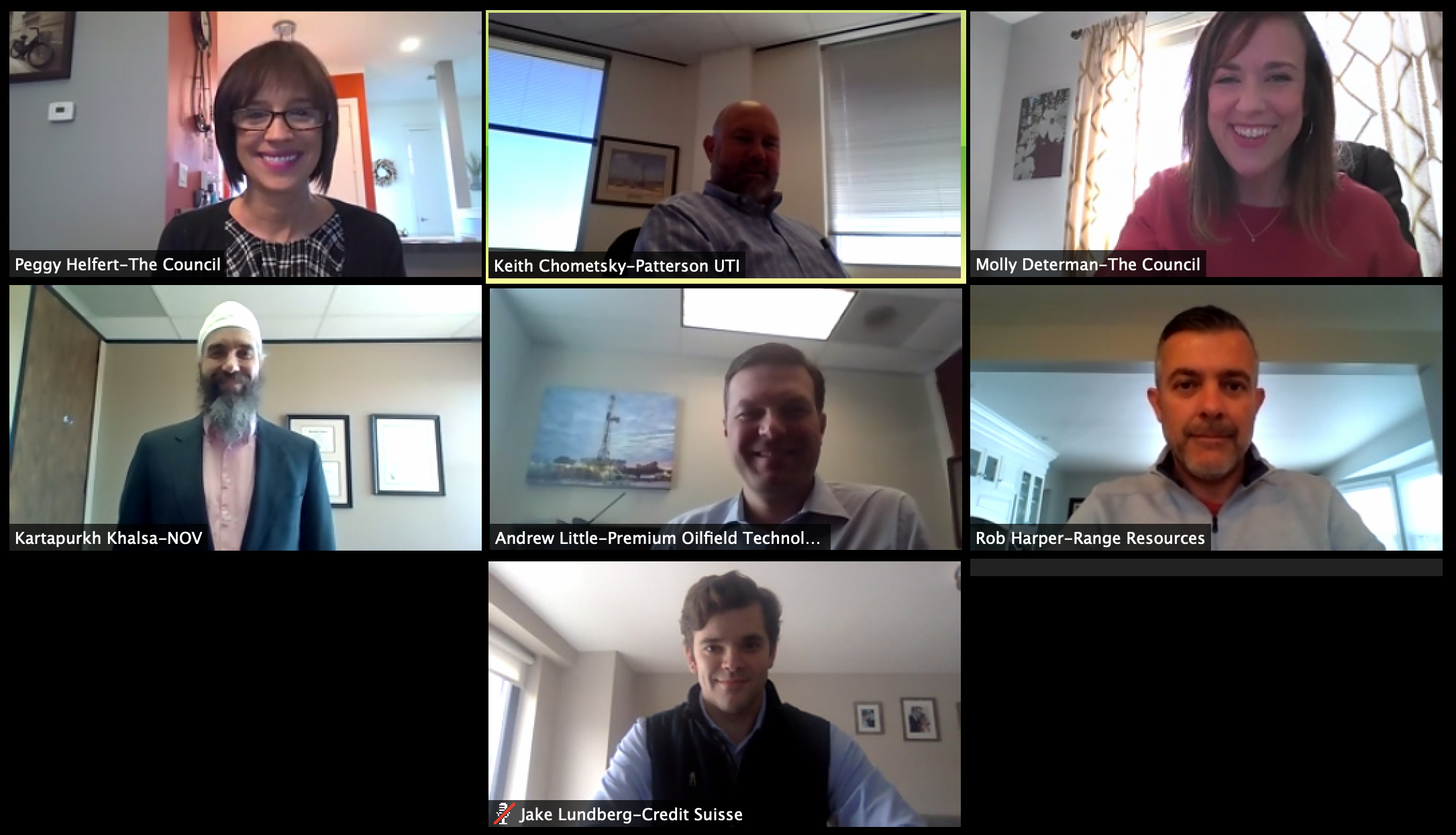
 Representatives from more than 30 member companies attended the Energy Workforce & Technology Council’s annual Supply Chain Conference on February 23. In addition to a market outlook and tariffs update, key drilling contractor/operator speakers shared insights on lessons learned in 2020 and the likely impact on business strategies within the oil and gas supply chain. Supply Chain Committee Member Andrew Little, VP, Business Development, Premium Oilfield Technologies, moderated the virtual event.
Market Outlook
Jake Lundberg, Lead U.S. Oilfield Services & Equipment Analyst, Credit Suisse, delivered a market outlook, that addressed the macro recovery and a “delicate rebalancing act.” Lundberg’s near-to-medium term outlook is bullish, citing a strong crude fundamental set-up to drive solid activity growth over the next several years.
 Lundberg predicts a rebalancing of global oil markets with a return to pre-covid demand levels by the second half of 2022. He said it’s unlikely to happen sooner because of lack of demand for jet fuel. Downside risks remain depending on the pace of the vaccine roll-out, which could suppress crude demand by 6 million barrels per day below normal, as well as OPEC+ sitting on massive spare production capacity.
Lundberg forecasts North America spending to fall 5-10% year over year in 2021 but expects to see strong sequential growth in the first and second quarters this year. Early indications point to strong year-over-year growth in 2022.
International activity is similar to the U.S. with some timing differences. The international recovery has already begun but is not synchronized across regions. Lundberg said he expects high single to low double-digit year-over-year growth in the second half of 2021, which will set the stage for a healthier market environment in 2022 when he expects to see modest growth.
Longer-term, he says the industry is facing an immense energy transition challenge, which will affect oilfield spending and the cost of capital. Companies will experience pressure as demand for fossil fuels decline and the cost of capital increases. He said this will be strongly felt by companies that don’t perform well on ESG metrics.
Tariffs Update
 Kartapurkh Khalsa, Senior Counsel & Director of Customs Compliance, NOV, provided insights on tariffs, noting little has changed with the new administration. All 232 and 301 tariffs are still in effect and are expected to remain in place for the foreseeable future.
Khalsa said the EU’s special steel import restrictions — imposed in response to the US 232 steel tariffs —are scheduled to end mid-year 2021. However, the EU is expected to begin imposing tariffs on foreign steel imports to continue protecting the EU steel market.
2020 Challenges
Keith Chometsky, Vice President, SCM-Procurement, Patterson-UTI, discussed 2020 challenges such as steep declines in the rig count, corporate bankruptcies, financial distress, and supply imbalance and disruption. Facing these challenges was difficult, but Chometsky saw positives in how the industry handled a shifting environment.
“From a supply chain perspective, which starts at the operator, we responded incredibly well,” Chometsky said. “While working together with our strategic suppliers, we were able to reduce cost, ensure supply and remain competitive during a tumultuous time.”
 Chometsky looked ahead to this year and beyond. Expected increases in activity will boost demand in goods and services, regardless of where a company is in the supply chain. As supply issues and slowdowns occur, it’s essential to communicate openly with key suppliers, Chometsky said. Transparency will be key this year as the industry seeks to control costs and engage in fair price negotiations.
Chometsky said companies would be wise to consider the importance of ESG, being good stewards and understanding the company’s position in 2021. Retaining valuable talent is important for companies as the market comes back. He said companies need to be conservative as they build inventory, stock, and headcount, and focus on working towards building a smart, sustainable supply chain.
Chometsky said the keys to a positive future are building great relationships with customers and suppliers based on honestly and transparency, and using data for decision making. Following this path with help to sustain an efficient and intelligent supply chain.
Rob Harper, Corporate Supply Chain Manager, Range Resources, described some lessons his company learned over the past year. Since mid-2020 Harper has seen a need for establishing a clear and firm process for vendor RFPs. His company has worked to provide instructions, and ensure bids are submitted properly according to their guidelines.
He said consistent, direct communication is an important part of competitive bidding. When awarding business, the team and vendor base needs to be clear about the internal pricing and bidding process.
“Adhering to the process, maintaining communication requested and bidding competitively will help operators and vendors work as a team and arrive at the same place,” Harper said.
For more information about the Supply Chain Committee, contact Sr. Director Membership Services Peggy Helfert.
